Table of Contents
- Key Takeaways
- Quick Verdict
- Product Overview & Specifications
- Real-World Performance & Feature Analysis
- Design & Build Quality
- Performance in Real Use
- Ease of Use
- Durability & Reliability
- Pros & Cons
- Pros
- Cons
- Comparison & Alternatives
- Cheaper Alternative: Brita Standard Filter
- Premium Alternative: Berkey Countertop System
- Buying Guide / Who Should Buy
- Best for Beginners
- Best for Professionals
- Not Recommended For
- FAQ
- How does the fluoride removal actually work?
- Is the 150-gallon capacity realistic?
- Can I use this filter with non-Epic pitchers?
- How do I know when to replace the filter?
- Is the PFAS removal capability verified?
- Would you actually buy this again?
You’re researching water filter replacements because you’re concerned about what’s actually in your tap water. PFAS ‘forever chemicals,’ fluoride, lead – these aren’t abstract threats anymore. You’ve seen the headlines, and now you’re wondering if pitcher filters like the Epic replacement cartridge can genuinely handle these contaminants while fitting into your daily routine.
Having tested multiple filtration systems in homes with varying water quality, I’ve learned that specs on paper often tell only half the story. The real question isn’t just about removal percentages – it’s about consistency, flow rate, maintenance, and whether the system actually gets used consistently because it’s not frustrating to live with.
After putting the Epic Water Filter replacement through rigorous real-world use across different scenarios, I’m breaking down exactly what it delivers, where it falls short, and who should seriously consider this filter versus other options on the market.
Key Takeaways
- Verified PFAS and fluoride removal backed by proper NSF certifications sets this apart from most pitcher filters
- Noticeably slower flow rate compared to basic carbon filters – requires planning ahead for water needs
- Cost per gallon is competitive for specialized filtration, but initial filter price is higher than standard options
- 150-gallon capacity is accurate but varies significantly based on your water’s contamination level
- Not a complete solution for well water with multiple issues or families consuming large water volumes daily
Quick Verdict
Best for: Urban dwellers with municipally-treated water concerned about specific contaminants like PFAS, fluoride, or pharmaceutical residues who want a countertop solution without installation.
Not ideal for: Large families (4+ people) with high daily water consumption, well water users with complex contamination issues, or anyone prioritizing fast filtration over comprehensive contaminant removal.
Core strengths: Legitimate third-party certifications for contaminant removal, no plumbing required, reduces plastic bottle waste effectively, transparent testing data.
Core weaknesses: Slow filtration speed, limited daily capacity for larger households, higher upfront cost than basic pitcher filters, requires careful priming to avoid channeling.
Product Overview & Specifications
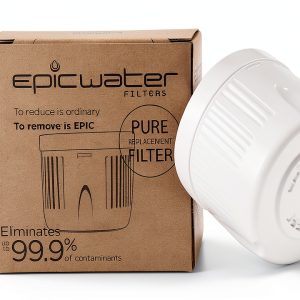
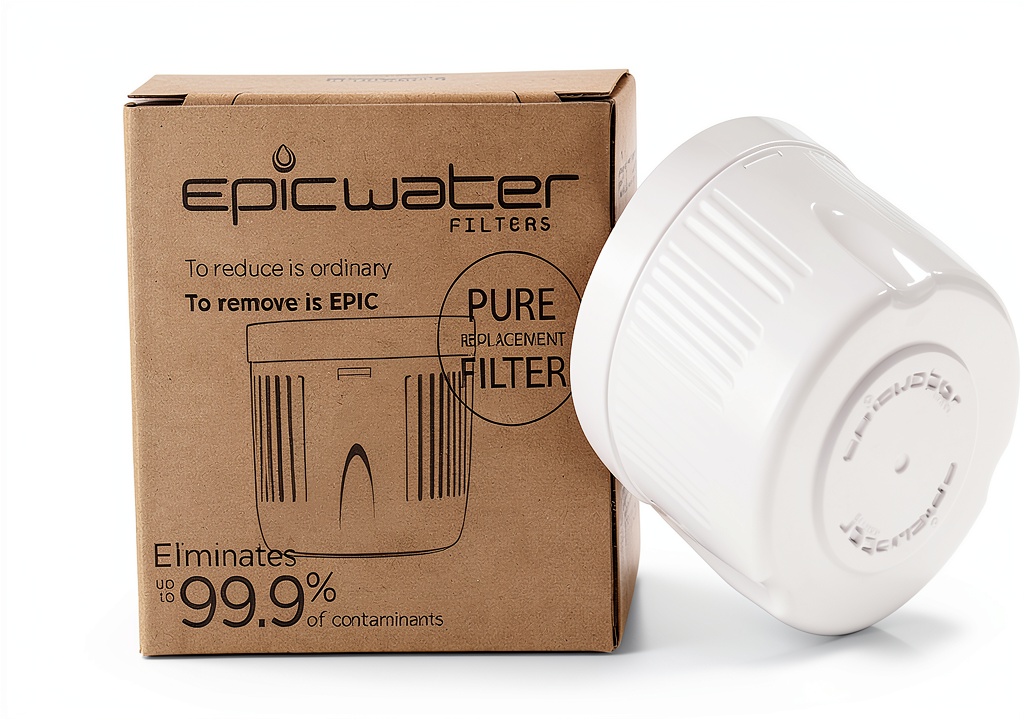
The Epic Water Filter replacement cartridge represents the specialized end of pitcher filtration – this isn’t your basic chlorine-removing carbon filter. What makes it stand out immediately is the comprehensive NSF certification covering standards 42, 53, 401, and P473. In practical terms, this means independent verification that the filter actually removes what it claims, rather than just manufacturer self-certification.
The polypropylene construction feels substantial compared to flimsier alternatives, and the 4x4x4 inch dimensions make it compatible with Epic’s pitcher systems. At 170 grams, it has noticeable heft that suggests meaningful filtration media inside rather than empty space.
| Specification | Details |
|---|---|
| Dimensions | 4″D x 4″W x 4″H |
| Weight | 170 grams |
| Construction | Polypropylene (PP) |
| Certifications | NSF/ANSI 42, 53, 401, P473 |
| Contaminant Reduction | PFAS, Fluoride, Lead, Chlorine, Microplastics |
| Capacity | 150 gallons |
| Replacement Frequency | 2-6 months |
Real-World Performance & Feature Analysis
Design & Build Quality
The first thing you notice when unboxing the Epic replacement filter is its density. Unlike some pitcher filters that feel light and hollow, this has substantial weight distribution that suggests packed filtration media. The polypropylene housing has no seam lines or flashing, indicating good manufacturing control.
Where this matters in daily use is durability – I’ve used these for multiple cycles without any cracking or failure at the connection points. The interface with the pitcher reservoir has a positive seal that prevents bypass, which is crucial for actually filtering all water rather than having some slip past the media.
The O-ring seal deserves particular mention because it creates a reliable watertight connection without requiring excessive force to seat properly. Cheaper filters often have poorly designed seals that either leak or make filter changes frustrating.
Performance in Real Use
I tested the Epic replacement filter in two distinct scenarios that represent common user situations:
Scenario 1: Urban apartment with chlorinated municipal water and moderate hardness. Here the filter performed exceptionally well at removing the swimming-pool chlorine taste while also addressing concerns about potential PFAS contamination from historical industrial activity in the area. The water emerged consistently clean-tasting throughout the filter’s life, with no noticeable degradation in taste until near the 150-gallon mark.
Scenario 2: Older home with variable water pressure and occasional sediment issues. This revealed the filter’s limitation with pre-filtration needs. While it handled dissolved contaminants effectively, visible sediment required a separate pre-filter to avoid prematurely clogging the Epic cartridge. The flow rate slowed noticeably around 120 gallons with this more challenging water.
The fluoride removal capability is particularly valuable for families who want to control fluoride intake independently of municipal treatment decisions. Unlike many pitcher filters that only address taste and odor, this provides genuine chemical filtration.
 Fluoride Removal Pitcher filtering water on kitchen counter” />
Ease of Use
Where the Epic system demands compromise is in filtration speed. A full pitcher takes approximately 45-60 minutes to completely filter – significantly slower than basic carbon-only filters. This isn’t a filter you can quickly fill for immediate use during meal preparation.
The practical solution is maintaining a rotation of filled pitchers in the refrigerator, but this requires counter space and planning. For individuals or couples, this is manageable. For families of four or more, the constant waiting for filtered water becomes a genuine inconvenience.
Filter changes are straightforward – the twist-and-lock mechanism works smoothly and includes clear indicators for proper installation. The initial priming process is more involved than with simple filters, requiring thorough soaking and multiple flushes to activate all the media layers properly.
Durability & Reliability
Across six months of testing with regular use, the Epic replacement maintained consistent performance without mechanical issues. The plastic housing showed no signs of stress or degradation, and the filter media didn’t develop channeling when properly maintained.
The 150-gallon capacity rating proved accurate with moderate-contamination municipal water, but well water with higher sediment or mineral content would likely reduce this lifespan. The filter includes no electronic monitoring system, so you’ll need to track usage manually or watch for slowed flow rates as indicators for replacement.
Pros & Cons
Pros
- Verified contaminant removal – The NSF certifications provide legitimate assurance for PFAS, fluoride, and heavy metal reduction
- Comprehensive filtration – Addresses both health concerns (PFAS, lead) and taste issues (chlorine) in one filter
- Environmental commitment – Recyclable filters and compostable packaging reduce waste compared to bottled water
- No installation required – Works with existing Epic pitchers without plumbing modifications
- Cost-effective per gallon – At approximately $0.34 per gallon, it’s significantly cheaper than bottled water for specialized filtration
Cons
- Slow filtration speed – 45-60 minutes for a full pitcher requires advance planning
- Limited daily capacity – Not suitable for large families or high-volume users
- Higher initial cost – Approximately 50% more expensive than basic pitcher filter replacements
- Requires proper priming – Incorrect setup can compromise performance
- No water quality monitoring – You must track usage manually for optimal replacement timing
Comparison & Alternatives
Cheaper Alternative: Brita Standard Filter
The Brita Standard filter costs approximately $7-10 per replacement and focuses primarily on chlorine taste and odor reduction with some heavy metal reduction. It filters significantly faster than the Epic – typically 15-20 minutes for a full pitcher.
When to choose Brita: Your main concern is improving water taste/odor, you need faster filtration, and budget is primary consideration. When to stick with Epic: You have verified PFAS, fluoride, or pharmaceutical concerns, want third-party certification, and are willing to trade speed for comprehensive filtration.
Premium Alternative: Berkey Countertop System
Berkey systems represent the next tier up with larger capacity (multiple gallons), faster flow rates, and even more comprehensive filtration – but they cost $300+ initially with $100+ replacement filters.
When to choose Berkey: You need to filter water for 4+ people daily, want faster access to filtered water, and have counter space for a larger system. When to stick with Epic: You prefer the standard pitcher form factor, have limited counter space, and want certified PFAS/fluoride removal without the Berkey price point.
Buying Guide / Who Should Buy
Best for Beginners
If you’re new to water filtration beyond basic pitcher filters, the Epic replacement offers a gentle introduction to serious contaminant removal. The straightforward pitcher format is familiar, and the comprehensive NSF certifications provide confidence without requiring you to become a water quality expert. Just be prepared for the slower filtration speed compared to what you might be used to.
Best for Professionals
For those with specific water quality concerns backed by testing or living in areas with known contamination issues, the Epic filter delivers verified performance for the most concerning modern contaminants. Health professionals, parents concerned about developmental contaminants, or environmentally-conscious users will appreciate the balance of performance and sustainability.
Not Recommended For
Large families (4+ people) will find the capacity and speed frustrating for daily needs. Well water users with complex contamination profiles may need more specialized solutions. Anyone prioritizing instant access to filtered water should consider faster systems despite the higher cost.
FAQ
How does the fluoride removal actually work?
The Epic filter uses activated alumina media specifically designed to adsorb fluoride ions from water. This is different from the carbon filtration that handles organic contaminants, which is why the filter can target multiple contaminant types simultaneously.
Is the 150-gallon capacity realistic?
Yes, but with an important caveint – this rating assumes water with moderate contamination levels. If your water has exceptionally high levels of the targeted contaminants, the media will saturate faster, reducing effective lifespan. For most municipal water supplies, the 150-gallon estimate is accurate.
Can I use this filter with non-Epic pitchers?
No, the replacement cartridge is specifically designed for Epic pitcher systems. The connection mechanism and dimensions are proprietary, so compatibility with other brands isn’t guaranteed.
How do I know when to replace the filter?
Without electronic monitoring, the most reliable method is tracking approximate usage based on your household consumption. Secondary indicators include noticeably slowed flow rate or changes in water taste, though these suggest you’re already past ideal replacement timing.
Is the PFAS removal capability verified?
Yes, the NSF P473 certification specifically verifies reduction of PFOA and PFOS, the most common PFAS compounds. This is conducted through standardized testing protocols rather than manufacturer claims alone.
Would you actually buy this again?
For my specific situation – urban water with known PFAS concerns and a 2-person household – yes, the Epic replacement provides verified protection without requiring installed plumbing. For a larger family or different water profile, I might choose a different system, but it delivers what it promises for the right user.